Cross-examination in a family law case is easier to get through when you understand how it works, keep your emotions in check, and know that the judge is judging your demeanor as well as your answers.

If you are a parent or party in a family law case and expect to testify, cross-examination is probably the part you dread most. This is when the other side’s lawyer questions you directly, often in a pointed or confrontational tone. This article explains three foundations that make everything else easier: the mindset you need, how cross-examination is structured, and what the judge is looking for while you answer. You do not need to have watched the video to use it.
The concepts behind handling cross-examination are not complicated. Applying them under pressure is the hard part, and it takes two things.
Cross-examination rewards the witness who stays disciplined from the first question to the last. That means listening carefully, answering only what was asked, and not letting the tone of the questions change how you respond. Discipline is a skill you build by preparing and practicing before you ever take the stand.
Many witnesses in family court are testifying against someone they are angry at, hurt by, or deeply distrust. The opposing lawyer may be questioning you on behalf of that person. It is natural to want to defend yourself, correct the record, or fire back. Those impulses work against you on the stand. Treat testifying as a task to perform well. Set your ego, anger, and resentment aside before you walk in, and carry yourself the way you want the judge to see you.
Cross-examination is the opposing lawyer’s questioning of you after (or in place of) your own side’s questions. Knowing its structure takes much of the surprise out of it.
Cross-examination usually consists of a long series of closed-ended questions. These are questions that point toward a specific answer and leave little room to elaborate. They often sound like this:
They are often asked in a sharp or accusatory voice. The tone is part of the style and does not change what the question actually asks.
Most closed-ended questions can be answered with one of four responses:
“It depends” is a useful fourth option for questions that cannot be answered accurately with a plain yes or no. The specific techniques for using each of these answers are best learned in detail and practiced ahead of time.
Sometimes a lawyer asks an open-ended question, such as “Why did you do that?” An open-ended question invites a longer explanation instead of a yes, no, I don’t know, or it depends. Most of cross-examination is closed-ended, and open-ended questions are the exception.
Cross-examination is not the end of your testimony. When the opposing lawyer finishes, the questioning passes back to your side.
For example, suppose you were asked on cross whether you ever yelled at your child, and you answered “yes.” When it is your turn, you could say to the judge: “Your Honor, when counsel asked whether I yelled at my child, I answered yes. I did, because he was about to step in front of a moving truck.”
Knowing this changes how you approach cross. You do not have to fit every explanation into the opposing lawyer’s questions, because you will have a chance to give context afterward. The procedure for your own questioning varies by court and by judge, so confirm how it works in your case with your lawyer or the court’s rules.
In a family law case, the primary audience for your testimony is the judge. Everything about how you act and speak in court should be directed at that audience. While you answer, the judge is weighing two things at once.
Your answers are evidence. The judge is listening for what they reveal about the facts in dispute, so accuracy and clarity matter.
Whether consciously or not, the judge also watches how you answer and how you handle adversity. Your demeanor helps the judge decide:
Consider the contrast. Is this witness angry and out of control, or calm, disciplined, and in control? Now ask which of those two people you would rather have caring for a five-year-old child. Most people choose the calm and composed one, and a judge deciding about children is asking much the same question. Staying composed when questions are uncomfortable is itself evidence about you.
This content is educational and is not legal advice. For your particular case, consult a qualified family law attorney and follow their advice.
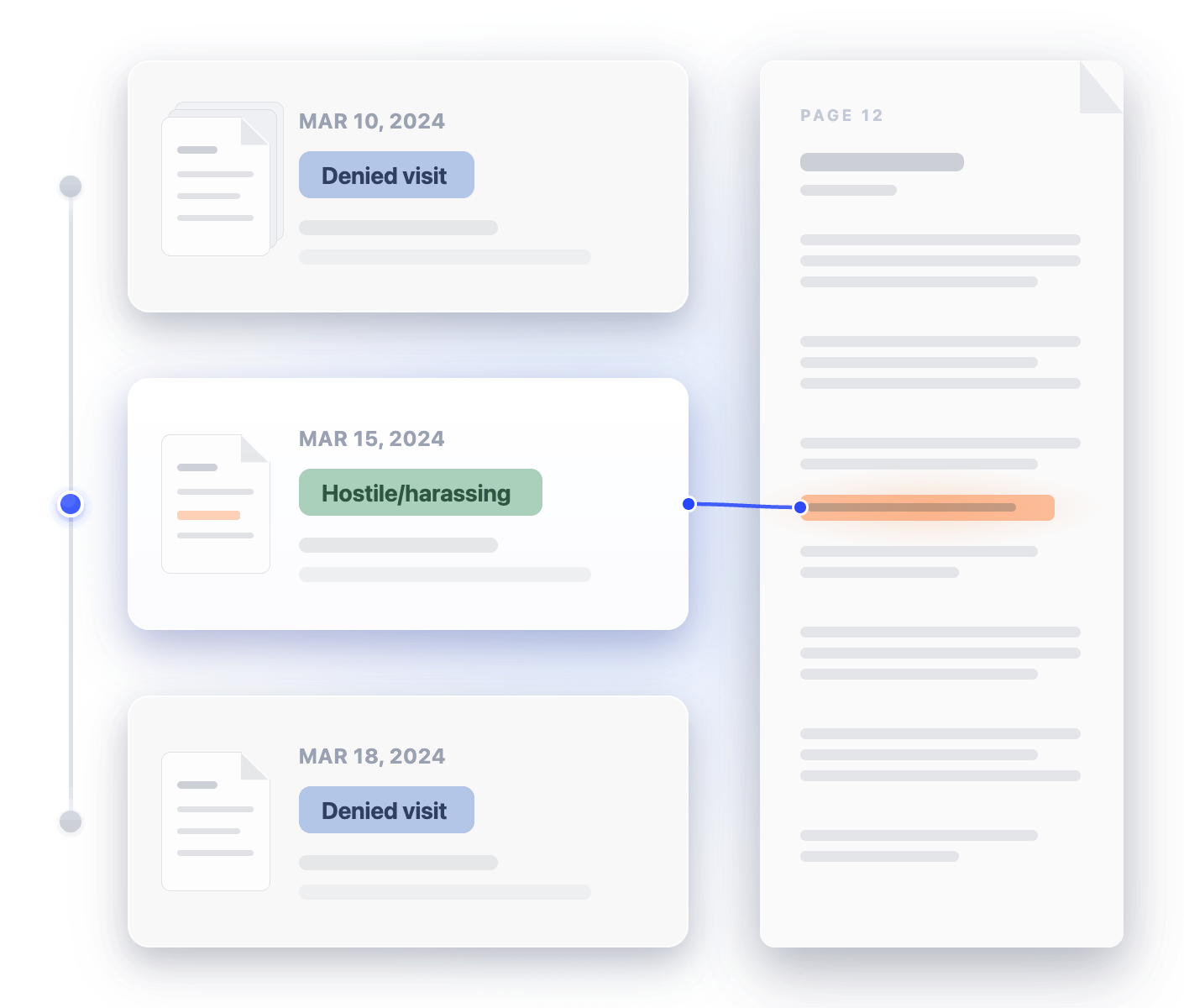
Chronodocs is a private workspace where parents in high-conflict custody, divorce, and post-decree matters build their case one event at a time. Log what's happening, attach the proof, and export a court-ready file when it's time.

The case-chronology workspace built for parents in high-conflict family matters. Turn scattered screenshots, texts, and emails into a court-ready timeline — searchable, labeled, and ready when court comes.
